Tuesday, July 24, 2007

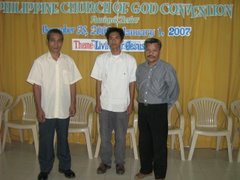
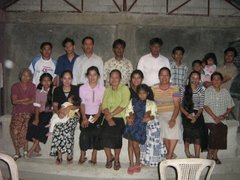
6th MINDANAO CHURCH OF GOD CONVENTION, Kalilangan, Bukidnon (May 25-27, 2007) By Sis. Bebbie A. Pollan

THEME: CONTENDING FOR THE FAITH

We always praise and thank God for His continuous goodness and blessings as we press forward in His grace. This year’s convention theme was CONTENDING FOR THE FAITH and truly it was a victory! The effort of all the brethren here in Mindanao which was led by Bro. Bernard C. Neri and Bro. Ed Coraraton was not in vain. Giving us always the challenge to be vigilant in our daily conversations as Christians, as respective congregation and outreaches from the different parts of Mindanao are being perturbed by the works of the devil, which prevails as of this moment, trying to disunite God’s people, but praise the Lord, He doesn’t want us to be conquered, for the workings of the Holy Spirit is sufficient, sending us His evangelists to edify His Church. For the first time we have Bro. Arnold Chichioco and Bro. Arnold Ordonio from Paniqui, Tarlac; of course! From Baguio City Bro. Jet Batalla; and Bro. Greg Escullar from Negros Occidental. Their presence was a great challenge. As usual, the cooperation of our brethren from Davao del Sur and its outreaches, viz: Bro. Edgardo Coraraton, and Bro. Alger Coraraton were present. And with us from Bukidnon were the outreaches from San Jose , Malaybalay City and Maramag. We have learned lots on the History of the Church and the Government of the Church. Another spiritual blessing that gave us the wisdom to stand for the truth.

Friday, May 25, 2007, 6:00 A.M.– Conductor was Sis. Lydia Ontong. The speaker was Bro. Alger Coraraton; Text: Romans 14:22, entitling it KEEPING THE FAITH, the speaker put emphasis on the word KEEP, appealing everyone of us to always KEEP our duty towards God, the Words of God, the promise of God, the great Love of God and the FAITH which is the theme of this year’s convention. Brethren! we are encouraged to press on, we will not fear little flock; for it is our Father’s good pleasure to give us the kingdom.

8:00 A.M. – 12:00 noon. Sis. Rose Villanueva led the congregational singing, and the seminar on the History of the Church of God started, followed by the Government of the Church lectured to us by Bro. Ed Coraraton and Bro. Arnold Chichioco respectively. God really doesn’t neglect His church in ignorance, His grace is sufficient, supplying everything that the church needs. He does not want His Church to be disunited for lack of knowledge. These lessons tuned in to the needs of the church particularly at this moment in time where there are some sorts of disputes in the government of the church.

2:00 P.M. – After the preliminaries, Bro Arnold Ordonio was the speaker, he spoke on the theme “Contending For the Faith”, taking his text from the Book of Jude 3. Contend means to give all your strength for the faith. To contend for the faith is, we must be watchful and vigilant for there are grievous wolves that will enter in the church, we must put on the whole armor of God that we may be able to stand against the wiles of the devil. We must remember that we have a wise enemy which is the devil, he has his instruments, the lust of the eyes, lust of the flesh and the pride of life, and even ourselves if we will not deny ourselves, there’s a tendency to backslide. His ways are subtle, thus we must fight the good fight of faith. We’ll stand for the truth, to conquer the devil’s works.

3:30 P.M. – Since we have new brethren added to God’s Church in this congregation, the presence of our brethren from Luzon was availed in its fullest by conducting a seminar on Entire Sanctification which was lectured to us Bro. Arnold Ordonio. This study is very very important, because this is one of the doctrines of the Church of God , this is the second work of grace that the saved (justified) ones must attain, without which no one can see God.

6:00 – 9:30 - After the devotional singing, and the special numbers, the conductor gave the speaker Bro. Jet Batalla, the pulpit, then he based his message from the Book of John 3:16, entitling his message “THE LOVE OF GOD”. The presence of the angels is not enough, thus HE created man to glorify and love Him. He created/prepared everything before man’s creation, for his needs. The phrase “FOR GOD SO LOVE THE WORLD” is in superlative degree. His love is matchless, and that was manifested by giving His only begotten Son, to save man from sin, whoever accepted His Son, loves Him. God does not want man to be in the place of destruction which is hell, that’s why He wanted mankind to accept His Son, by way of repentance to refrain condemnation. There’s an invitation to love God, then 3 souls draw nigh for forgiveness.


Saturday, May 26, 2007, 6:00 A.M.– After the preliminaries, Bro Greg Escullar spoke on “The Sacrifice To Teach The Gospel of God”. Text was 1st Cor. 9:16-27. The Holy Spirit has worked sufficiently, reminding every Minister of God to be cautious in uttering words to avoid loss of respect, he should be meek in every manner. The servant of God is not a boss, he should be an ideal leader, and an example to be followed by the brethren. He must sacrifice to win more souls for Christ. King Saul, abused his power and disobeyed God’s command, so God divested his kingship. Servants of God who will do the same as King Saul will be stripped off eventually by the ministry that God has entrusted to him. Ought to be, ministers should be meek and humble, they should avoid the attitude that “what pastor wants, pastor gets,” how embarrassing to have ministers like this! Ministers should be ideal and must sacrifice to win souls as the primary concern of the church.

8:00 A.M. – 12:00 noon. The seminar on the History of the Church of God , and the Government of the Church lectured to us by Bro. Ed Coraraton and Bro. Arnold Chichioco continued.

2:00 P.M. – After the preliminaries with Sis Mishel Salinday, Bro Arnold Chichioco was the message bearer, his thought was entitled as “The Life Span of Man”, having his text from Psalms 90:9. Before the flood, the life span of man reached to nine hundred sixty nine years. And generation to generation the life span of man is shortened. How much more today, the life span is between 60 to 70 years old. And according to James 4:13 & 14, the life of man is compared to a vapor that emerges a little then vanishes. Since our life is short, we have to work it out in our very best, making our lives worthwhile while we are still breathing the life that God gave to us. The unsaved must repent their sins, the saved ones must go through the second work of grace, by cleansing from all the filthiness of the flesh and spirit. God’s judgment based on how man lives the life that he has. The Holy Spirit works abundantly, there were 9 souls went to the altar.

3:30 P.M. – The seminar continued at this moment, we learned so many things. Praise God! Most of the topic focused on the Government of the Church. God has taught every Christian to discern and how to deal the undesirable and haughty spirit in His Church. God is not late; He is on time to rescue His Church who is beset always by the works of the devil to cause division.

6:00 – 9:30 - Before the message, the usual procedure was observed, the singing of devotional and the hymns, led by Sis. Metzi Paz A. Pollan and Sis. Arma A. Neri respectively, presentation of special song entitled Without Him rendered by a child named Christian Yap from Maramag, Bukidnon. Bro Jet Batalla was the speaker. He spoke on the “Spirit of the Gospel”, text was on 11 Cor. 3:1-11. There are two spirits, which is the spirit of truth and spirit of error. The former is of God and the latter is of the devil. The spirits of revenge, worldliness, haughtiness and preeminence are all carnality. The acceptance of Spirit of the Gospel would be in the Spirit of Holiness and that is thru the cleansing from all the filthiness of the flesh and spirit. As you walk daily the Christian way you ought to have the spirit of modesty, meekness and love. The love to keep God’s will. Do you already have the Spirit of the Gospel? Thanks God! Eight souls went to the altar for Entire Sanctification.


Sunday, May 27, 2007, 8:00 A.M.– All brethren were gathered together to worship God in the beauty of holiness. After the congregational singing, Bro. Art. BaldecaƱas led the prayer. Thereafter, the Sunday School started, with Bro. Arnold Chichioco as the Teacher. The topic was the Evening Light. Everybody was blessed of the topic for God has given us the understanding of the History of the Church. From the Morning Light, Dark Ages, Cloudy Day and Evening Light. An emphasis was obvious that Christians should continue studying, there’s no end in studying and searching in His Words. The worship service started, with Bro. Art BaldecaƱas as the presider.

8:00 A.M. – Bro. Jet Batalla was the speaker, his speaking on the Ten Virgins in Matthew 25:1-12. There are two kinds of Christians, the foolish and the wise. The foolish lacks understanding, no common sense, and has no spiritual wisdom, meaning they’re not baptized with the Holy Spirit. Christians should not allow the Holy Spirit to stay long outside, it should be allowed to enter in the clean vessel heart. All the filthiness of the spirits must be cleansed. Christians who are still in the carnality state are encouraged to search himself if the Holy Spirit is already present in their hearts, to go unto perfection. God does not want us to be like the 5 virgins who did not prepare and fill their lamps with oil, thus when the groom has arrived they were not able to go with Him in the marriage, they were being closed. Whereas the 5 wise virgins had made their lamps filled with oil. Oil here represents the Holy Spirit. It is very difficult to be sanctified all alone by ourselves, we need the help of the Holy Spirit. So let’s be humble, for God will claim His Church without spot and wrinkle. All the Christians sought the help of the Holy Spirit to be filled with it. Everybody kneeled down for consecration, without which no one can see the Lord.

2:00 P.M. – Sis. Chym A. Pollan led the congregational singing. Bro. Arnold Ordonio spoke on “Man’s Most Precious Property” taking his thought from the Book of Mark 8:36-37. Is riches, fame or talent that man must possess as his precious property? No! It is the soul, the living soul, that God has breathed into his nostrils for him to have the breath of life. Christ has died for the souls of men; therefore the soul of man is very precious, because it is itself that will give account to God. The soul that sinneth it shall die. It is man’s great loss if his soul has no relation with God. If he is in the bondage of sin everything is miserable. Man’s riches rely on his relation with God, to be saved from sins. All the riches here on earth are all vanity if Christ is absent in his life. Man’s most precious property is his soul. Soul will be at rest if he is saved from sin. There is peace, hope and joy if Christ is in you.

3:30 P.M. – The seminar’s topic continued, day by day more and more lights came to us, thank God!

6:00 – 9:30 - Devotional singing was led by Sis. Haia Cheene A. Pollan and again Sis. Chym Pollan led the congregational singing. Bro. Jet Batalla was the speaker, basing his thought from the Book of Daniel 2:31-35 and he entitled it as “THE CHURCH – A MOUNTAIN. The Church symbolizes a beautiful woman, it is compared likewise to a city, soldier, body and a mountain. The Church is a Mountain because it prevails among the preeminence of the four kingdoms which Nebuchadnezzar had dreamed of, and it was interpreted by the wisdom of God given to Daniel. The four kingdoms were being destroyed for the Kingdom of God has set His. It is not a literal kingdom but a spiritual kingdom which will not be destroyed and it shall stand forever.


Greetings to our dear Americans, Africans and other nationalities brethren, thank God so much for your ardent prayers, that we Filipino saints will preserve salvation blameless till the end, how we hope and wish to have your presence with us during our next Mindanao convention, Lord willing! Please continue to pray for us and special request to pray for our new young people to press on, they are: Brethren Paul, Bong and Riza Bernandino, Elvin Bandianon, Wilma Manta, Henry and Delia, and Christian Pollan and all the brethren in Kiawal, Maramag. You’re part of the success of God’s ministry here in Mindanao . Your prayers help a lot and the continuous sending of The Way of Truth paper. Again, thank God for everything!

And to all the brethren who were here, thank God for your continuous support in one way or another, and to all who were not able to attend we’re expecting your presence next convention.

(Open this web site; http://picasaweb.google.com/jetbat/6thYearMindanaoConvention07 )

Wednesday, July 11, 2007

33RD YEAR ANNIVERSARY OF THE CHURCH OF GOD, PHILIPPINES

Report on the 33rd Anniversary of the Church of God, Philippines:

Last Sunday, 8Th of July, Saints from Metro Manila; Bulacan; Nueva Ecija; Tarlac; Pangasinan; Benguet; Aurora & Isabela Provinces came for the 33rd anniversary of the Church of God, Philippines. There were more or less 350-400 in attendance, we felt it's like convention time (please visit the COG Photo file the pictures of the newly made over chapel; etc.). As Sis. Grace of Samar; Bro Jet & i went to Lacayanga as early as 6:45am, the brethren from Sta. Maria & Norzagaray were just a few feet ahead of us and they were the first to arrive, thank the Lord for safe travels of all these dear ones and others to follow. The anniversary celebration was from 8am-5pm.

Our Sunday School started early at 7:50am. Our anniversary lesson was actually the Lesson #2 on the 3rd quarter Sunday School Journal: The Family of God at prayer. But God impressed on our hearts this to be our lesson as Saints from various part of the Luzon Island are coming over and His church must pray earnestly as the church here has a lot of battles to be won yet and we know we know our help only comes from God. And our theme for this year's anniversary was: "A praying church is a powerful church". The Lord help our Sunday School Teacher, Bro. Arnold Chichioco as he showed the accomplishments of prayer in the family of God and when the church prays in one accord, God will hear & answer as He did to the early morning church and prayers strengthen for trials.

The Lord blessed our souls on His message brought by Bro. Jet on John 12:35-36 "Believing in the Light" (the special song given by the Saints from Sta. Maria "In the light of God" just coincided with the message, praise the Lord. The Saints didn't know then the title of the message). Bro. Jet spoke on the history of the Church of God from the day our Lord Jesus Christ built His church on the day of Pentecost until it reached the Philippines, not China or India or Malaysia but the Philippines and we are so blessed to hear that.

A brief history (as we used to hear it from our dear pastor) how the Church of God in the Philippines was born was given to us along with the message. Our dear pastor, Victoriano Luzong & his late wife were saved from their sins in Baguio City in 1948 that the one who witnessed to them brought them to the Church of the Nazarene. Pastor said this sectarian church had a high standard then and was teaching about salvation, holiness, modesty until there came a time some of their missionaries from America who came to the Philippines had their hair cut & were wearing wedding rings that they decided to come out of this sect. However, they just founded another holiness church since they do not know yet about the Church of God. As Bro. Jet said it was not an accident that our pastor got hold of a copy of The Way of Truth Magazine but it was God's will for our pastor was seeking for the truth. One of the pastors in that group one day told pastor "you may want this (a copy of The Way of Truth" magazine late 1960's issue), I've got no use of this". Pastor told us that pastor tried to communicate with the publisher hoping for material support but they told him they are not a sectarian group & are not giving any material support but giving out those magazines for free.

Our dear pastor read the magazine & communicated with Bro. Earl Marquis, the pastor of the Church of God in Hagerstown & publisher of The Way of Truth Magazine during those days. And as he diligently studied the Word of God about the Church of God mentioned in The Way of Truth, the truth came to him that on July 4, 1974 our pastor & his family along with 6 other brethren who also believed (they were 10 in all), denounced sectism, the greatest sin of all ages and from then on lived & preached about the Church of God, Justification, Sanctification, Divine Healing & unity of the believers.

And from that small beginning, pastor & the few Saints who were added to His church in early 1980's prayed & fasted three days & three nights several times and local churches were planted with God's mighty help from the peaceful town of Paniqui to the northern part of Ilocos Norte to the southern part of Saranggani Province in Mindanao; from the eastern mountains of Benguet , Aurora and Isabela to the Western mountains of Tarlac our dream of local church all over the Philippine Islands is slowly coming true, thank the Lord. Filipino Saints who are working abroad are also doing their best to bring Christ to our fellow countrymen thus there are God's work in Dubai; Saudi Arabia; Canada; praise the Lord. And we are praying in more countries around the world where there are Filipinos. To God all be the glory for what He has done & doing to our country. At the end of the message, 7 precious souls were at the altar seeking salvation, praise the Lord.

The afternoon service started at 1:30pm. Special songs; reports of God's work & greetings were rendered by the various local churches. Bro. Antonio Domrique spoke on our theme. His text was on Acts 6:4 and he exhorted & encouraged the brethren to give ourselves continually to prayer & to the ministry of the word. And we all knelt in prayer pouring out our souls; telling all to Jesus about the condition of His church in the Philippines especially in Mindanao and we felt God's presence all the day long, thank the Lord for the peace in our hearts as we claim His promise everything will be all right & His church will be victorious when the storm passes by.

With this report we also wish to convey our deep appreciation though we know words will never be enough to thank our dear pastor, Victoriano T. Luzong a true servant of our Lord and Master, Jesus Christ. He has been so faithful even until he got sick few years back in laboring for the furtherance of the gospel of Christ. His dedication & faithfulness to God's work, as he never hesitated to answer God's call when there was something to do, whether it was to labor with his hands, to preach the Word, or pray for God to bless His Church. Many lost souls found the truth for he labored so faithfully in the Kingdom of God. The Lord has been so good not only to him but to God's church here in our country for he is still with us (he was energetic & looked very happy last Sunday) until these days. God knows we need him more today as we all endeavor to keep the unity of the Saints here in the Philippine Islands. And to the late Bro. Earl Marquis; to dear Uncle Ollen & Uncle Alvin; and to all the dear Saints in the United States of America we, the Filipino Saints, say thank you very, very much for keeping true and faithful to the truth of God's words that in His time this truth and light shone upon us here in the Philippine Islands, praise the Lord. May God continue to bless you all as you, through the Way of Truth Magazine, bring the lost to our Lord Jesus Christ.

Also we would like to thank all the dear Saints who helped one way or another for the repair our chapel though it is not yet fully finished & there are still things to be done yet, please continue to remember the needs in your prayers, too.

And to all who will read this read report, we do covet your fervent prayers for all the Filipino Saints and His church here. Thank you all for your love & concern for His church in the Philippine Islands!!!


unworthy servant of the living God,

sis. judith d batalla

Monday, July 09, 2007

MUST WE SIN? By DS Warner

Must We Sin?


A Conversation Between Brother Light and Brother Foggy

First Conversation

Bro. Light: Good morning, Brother Foggy. I am happy to see you. Come in. I have been wishing to have a talk with you about this great salvation I have found in Jesus.

Bro. Foggy: I am a little in a hurry, Brother Light. Besides, I do not know whether it is safe to have a talk with you or not, since you folks claim to be so good.

Bro. L: Why, Bro. Foggy? I do not see why you should be afraid of us. I am sure the Lord has made us harmless as doves. But I remember that is about the way I used to feel. Take a chair.

Bro. F: Well, to tell the truth, I should like to have a talk with you. They tell me that you sanctified folks claim to be free from sin, and I can’t believe that, for the apostle Paul confessed that he had sin dwelling in him, and I don’t think we can get better than he was.

Bro. L: Well, Bro. Foggy, I admit that in the seventh chapter of Romans the apostle wrote as if he had sin dwelling in him, but let us get the Book and read carefully and see what he meant. That we may understand him better, let us begin with the sixth chapter. “What shall we say then? Shall we continue in sin, that grace may abound? God forbid.” Here you see the question is clearly stated and as clearly answered. “God forbid that we should continue in sin” surely implies that we can and must cease sinning. To make the matter still stronger, the apostle asks another question: “How shall we, that are dead to sin, live any longer therein?” We can no more commit sin and remain saved than a man can carry on business here when he lies dead in the cemetery. Let us read also verses 6, 7, 8: “Knowing this, that our old man is crucified with him, that the body of sin might be destroyed, that henceforth we should not serve sin. For he that is dead is freed from sin. Now if we be dead with Christ, we believe that we shall also live with him.” Here he teaches that our “old man,” which is the “body of sin,” is crucified, destroyed, and that he who is thus dead to sin is freed from sin and then adds, “If we be dead with Christ,” etc. So you see that we living men are dead to and freed from sin. In verses 10 and 11 he admonishes the Roman brethren, and us as well, to be dead to sin and alive to God, as really as Christ is Himself. Note verses 15 and 18: “What then? shall we sin, because we are not under the law, but under grace? God forbid.” “Being then made free from sin, ye became the servants of righteousness.” Also verse 22: “But now being made free from sin, and become servants to God, ye have your fruit unto holiness, and the end everlasting life.” These Scriptures declare us free from sin, dead to sin. And in other verses in this chapter the apostle Paul says that we should not “live any longer therein” and that “henceforth we should not serve sin.” In verse 12 he admonishes, “Let not sin therefore reign in your mortal body,” and in verse 14 he says, “For sin shall not have dominion over you.” All these surely teach the opposite of the idea that we have to sin all our lifetime.

Bro. F: It would appear so, but still are we not forced to the opposite conclusion by his words in chapter 7, verses 14 to 25? Please read them. Surely, this does not look as if he claimed to be free from sin, does it?

Bro. L: If we were to take these verses apart from their connection and all the rest of the apostle’s teaching, it would not seem so, but if we take the whole chapter, we can plainly see that Paul did not give that as his experience at the time of writing. Paul was not giving this chapter as his experience as a Christian, but was relating his experience while he was under the law, showing the nature of the law service, as compared with the gospel service. He begins the chapter with, “Know ye not, brethren, (for I speak to them that know the law)…?” In verses 1-12 he speaks of the law–its nature, its object, its effect–and of the fact that he was married, or bound to it until Christ came, when he became dead to it and was married to Christ. And he says in Gal. 3:24 that the law was a schoolmaster to bring him to Christ. In verses 14-23 he illustrates his experience while under the law. We know that the apostle did not give that as his experience then, for it would positively conflict with the facts of his life. It is not true at all that the good he wished to do he did not, and that the evil he would not, that he did. Did he not go about constantly doing good? And was not his life pure, holy, and free from evil doings? No, he did not travel about wishing to do good, but instead disgracing his profession and dishonoring the name of Christ by sinful practices. Had this been the case, he would never have said, “Be ye followers of me, even as I also am of Christ” (I Cor. 11:1), nor, “Brethren, be followers together of me, and mark them which walk so as ye have us for an ensample” (Phil. 3:17). But his holy life is on record. He himself says, “For to me to live is Christ” (Phil. 1:21). His life was not spotted with the flesh but was in moral quality the life of Christ. Note verse 20: “It is no more I that do it, but sin that dwelleth in me.” That this was not the apostle’s experience at the time of writing is positively proven by his words in the preceding chapter. Surely, no consistent preacher, much less an inspired apostle, would advocate freedom from sin, and urge others to attain to this freedom, and yet confess sin in himself. But hear him: “For I through the law am dead to the law, that I might live unto God. I am crucified with Christ: nevertheless I live, yet not I, but Christ liveth in me: and the life which I now live in the flesh I live by the faith of the Son of God, who loved me, and gave himself for me” (Gal. 2:19,20). No pharisaical big I nor old man of sin lived in him, but all such was crucified and destroyed out of him, and only Christ lived there, so he testifies. The two laws described as being in the same person denote two opposite moral forces. The one is the principle of righteousness; the other, the “law of sin.” A similar dual state is mentioned in Galatians: “The flesh lusteth against the Spirit, and the Spirit against the flesh: and these are contrary the one to the other” (Gal. 5:17). This “flesh,” or “body of sin,” the apostle says, “they that are Christ’s [that is, wholly consecrated to him] have crucified . . . with the affections and lusts” (Gal. 5:24). The “body of this death” (verse 24), which is the cause of all the trouble, is the same as the “body of sin” in Rom. 6:6, which he says is crucified and destroyed. Consequently, the Roman converts were “dead to sin” as a fact of salvation, and so he admonished them to “reckon themselves dead indeed to sin” and not to allow sin to reign in their mortal bodies. He would surely not have admonished them to be free from sin, and the very body of sin, if he himself had sin dwelling in him. When he cried out, “Who shall deliver me from this body of death?” he immediately responds, “I thank God, through Jesus Christ our Lord.” There is, then, no excuse for our having the body of sin in us, since there is deliverance for us, even could it be proved that Paul was not free from it. Passing from the seventh chapter into the eighth, we see that Paul ceases to speak of his law experience and tells of his liberty through Jesus Christ. He takes the witness stand again and tells his own present experience. In verses 1 and 2 he says, “There is therefore NOW no condemnation to them which are in Christ Jesus, who walk not after the flesh, but after the Spirit. For the law of the Spirit of life in Christ Jesus hath made me free from the law of sin and death.” To be “free from the law of sin and death” is to be free from that “other law” of indwelling sin described in the preceding chapter. This settles the question. The apostle declares himself free from the condition he pictured to the Roman church. So it is clear that in the seventh chapter Paul was giving the experience he had while endeavoring to serve the law. He loved the law and was zealous for it, but he did not have the power or grace to measure to its demands. He speaks of the law of his mind, which was his inward desire to do good, and says that with his mind he loved the law and consented to it, but that when he would do good, evil was present with him, and that the law of sin in his members overcame him, and he fell into sin. In this chapter the apostle shows that the law was inferior to the gospel–that while the law was good it only condemned sin and did not have the power to deliver from sin. But in the third verse of the next chapter we read, “For what the law could not do, in that it was weak through the flesh, God sending his own Son in the likeness of sinful flesh, and for sin, condemned sin in the flesh,” and in Heb. 7:19, “The law made nothing perfect, but the bringing in of a better hope did.” Whatever reference Paul had to himself in this description evidently referred to the past as in 1 Tim. 1:15–“This is a faithful saying, and worthy of all acceptation, that Christ Jesus came into the world to save sinners; of whom I am chief.” Here Paul speaks of himself as the chief of sinners, which can be understood only as referring to what he had been, and yet he speaks in the form of the present, just as he does in Romans 7.

Bro. F: Well, Bro. Light, I must confess you have brought more Scripture to bear on the subject than I had thought of, and I’m not so sure but that you have the correct view of the matter. But doesn’t the apostle Paul say somewhere that there is “none good,” “none righteous”?

Bro. L: Yes, in the third chapter of Romans, from the ninth to the eighteenth verses, he gives us even a darker picture than the one we have just viewed. I will read it to you. “What then? are we better than they? No, in no wise: for we have before proved both Jews and Gentiles, that they are all under sin; as it is written, there is none righteous, no, not one: there is none that understandeth, there is none that seeketh after God: they are all gone out of the way, they are together become unprofitable; there is none that doeth good, no, not one. Their throat is an open sepulchre; with their tongues they have used deceit; the poison of asps is under their lips: whose mouth is full of cursing and bitterness: their feet are swift to shed blood: destruction and misery are in their ways: and the way of peace have they not known: there is no fear of God before their eyes.”

Bro. F: Well! Well! Bro. Light, that’s pretty bad, indeed. How can you explain these statements, if a person can be free from sin as you say?

Bro. L: That’s easy enough to do. You see, in verse 10 he says, “As it is written, There is none righteous, no, not one.” So this is written somewhere, and Paul simply quotes it from the Old Testament. To understand just who this is affirmed of, let us turn to the place from which he quotes. Here it is. I will read it. “Lead me, O Lord, in thy righteousness because of mine enemies; make thy way straight before my face. For there is no faithfulness in their mouth; their inward part is very wickedness; their throat is an open sepulchre; they flatter with their tongue. Destroy thou them, O God; let them fall by their own counsels; cast them out in the multitude of their transgressions; for they have rebelled against thee. But let all those that put their trust in thee rejoice: let them ever shout for joy, because thou defendest them: let them also that love thy name be joyful in thee. For thou, Lord, wilt bless the righteous; with favor wilt thou compass him as with a shield” (Ps. 5:8-12). I will read also Ps. 14:1a, “The fool hath said in his heart, There is no God. They are corrupt; they have done abominable works, there is none that doeth good. The Lord looked down from heaven upon the children of men, to see if there were any that did understand, and seek God. They are all gone aside, they are all together become filthy: there is none that doeth good, no, not one. Have all the workers of iniquity no knowledge? who eat up my people as they eat bread, and call not upon the Lord?” In these Psalms we find the very things that the apostle quotes in Romans 3, and we find they apply only to the wicked, to those who do not seek God, but foolishly say in their hearts, “There is no God.” But in both places we find another class spoken of–a class who “put their trust in God,” “love his name,” and who are termed “the righteous” and “my people.” So you see clearly that when it is said, “There is none good, no, not one,” “none righteous,” “none that seek after God,” etc., only the general mass of unregenerated sinners are those of which is spoken. But the righteous are also brought to view as another class of characters.

Bro. F: Indeed, Bro. Light, I never understood that Scripture before. I have learned one good thing, and that is, when a quotation is made in the New Testament from the Old, we should go back to the original to get a good understanding of the matter. What shall we do with Jesus’ words, “There is none good but one, and that is God”? Does not that mean that all commit sin and that none are holy and pure in this life?

Bro. L: That Scripture also will be plain when we read the connection. I will turn to the place and read it. Here it is: “And, behold, one came and said unto him, Good Master, what good thing shall I do, that I may have eternal life? And he said unto him, Why callest thou me good? there is none good but one, that is, God: but if thou wilt enter into life, keep the commandments. He saith unto him, Which? Jesus said, Thou shalt do no murder, Thou shalt not commit adultery, Thou shalt not steal, Thou shalt not bear false witness, Honour thy father and thy mother, and, Thou shalt love thy neighbor as thyself. The young man saith unto him, All these things have I kept from my youth up: what lack I yet? Jesus said unto him, If thou wilt be perfect, go and sell that thou hast, and give to the poor, and thou shalt have treasure in heaven: and come and follow me. But when the young man heard that saying, he went away sorrowful: for he had great possessions” (Matt. 19:16-22). You see, the young man was a legalist, a person who thought he could make himself good by his own works; hence he did not ask Christ to save his soul, but wanted to know what good things he could do himself that he might have eternal life. Christ, wishing to convince him that he was on the wrong road to get salvation, told him there is none good, that is, within and of himself, but God. Whatever goodness God’s creatures possess is derived from Him, for He is the source of all goodness. It is true there is none good but one, and that is God. Therefore if the righteous were to lose God out of their hearts, there would be nothing good left in them. But “as God hath said, I will dwell in them, and walk in them; and I will be their God, and they shall be my people” (II Cor. 6:16). Yes, “if we love one another, God dwelleth in us, and his love is perfected in us. Hereby know we that we dwell in him, and he in us, because he hath given us of his Spirit” (I John 4:12,13). The apostle Paul says in Eph. 3:17 and 19, “That Christ may dwell in your hearts by faith” and “That ye might be filled with all the fulness of God.” There is none good but God, but we, being filled with all the fullness of God, must be good also, yes, “full of goodness” as we read in Rom. 15:14. And David called God his goodness. After Christ had told the young man to keep the commandments, and the young man had stated that he had done so from his youth, he added, “What lack I yet?” Jesus answered, “If thou wilt be perfect, go and sell that thou hast, and give to the poor, and thou shalt have treasure in heaven: and come and follow me.” So you see, Bro. Foggy, Christ told the young man how he could become more than a good man, even a perfect man. When He spoke about people’s being good through their own independent works, He said, “There is none good but God,” but when He spoke of the result of men’s denying themselves and following Him, He taught that they could by His grace become even perfect, and we all know that perfection is a higher standard than goodness. Moreover, the New Testament frequently acknowledges man as good. Of Joseph it is said, “He was a good man, and a just” (Luke 23:50). Of Barnabas it is recorded that “he was a good man, and full of the Holy Ghost and of faith” (Acts 11:24). Jesus says in Luke 6:45: “A good man out of the good treasure of his heart bringeth forth that which is good; and an evil man out of the evil treasure of his heart bringeth forth that which is evil; for of the abundance of the heart his mouth speaketh.” And Paul, writing to Titus, says that a bishop should be “a lover of hospitality, a lover of good men” (Tit.1:8). These texts are sufficient to show that both Christ and His apostles taught that men in this life are good, yes, “good men.” Not, however, by their own graceless works, but by receiving a good treasure in their hearts, even God in them through “faith and the Holy Ghost.”

Bro. F: I see clearly that if we were to teach that no one can be made a good man by the grace of God, it would conflict even with what Christ told the young man–that he could be perfect–and also with many other New Testament passages. So I judge that your explanation on the subject is correct. And yet does there not seem to be a contradiction, since Christ said to this young man, “There is none good but one, that is, God,” while elsewhere the Word confesses that men are good?

Bro. L: When all the facts are taken into consideration, it is plain enough. In the first instance the Saviour simply casts self-righteousness into the dust, while in the other the grace of God, which takes out of our hearts the evil treasure and puts in the good, is confessed and extolled.

Bro. F: Well, Bro. Light, that all looks plain to me now, and I am glad the Scriptures so beautifully harmonize when we understand them. But it seems to me I have read somewhere that God only is holy. Do you know what that means?

Bro. L: That is found in Rev. 15:4, which reads, “Who shall not fear thee, O Lord, and glorify thy name? for thou only art holy.” This may be understood just as the last text. God only is holy in an independent sense. We are “partakers of his holiness” (Heb. 12:10), which makes us holy also. Hence He says to us, “Be ye holy; for I am holy” (I Pet. 1:16).

Bro. F: It must mean something like that, or else it would conflict with the many passages in the Old and New Testaments which teach that men should be and were holy in this life. But now I wonder how you can get over this text: “If any man says he lives without sin, he is a liar, and the truth is not in him.”

Bro. L: Excuse me if I must smile a little at that quotation. But can you tell me where to find that text?

Bro. F: Well, I can’t recollect just now where to turn to it.

Bro. L: Are you sure it is in the Bible at all?

Bro. F: Oh, yes, I know it is there. I have surely read it in my Bible more than once. In fact, I have been familiar with those words ever since I was a boy. Why, no longer ago than last Sunday I heard our preacher quote them in his sermon, and you know he is a fine scholar. Then I recollect hearing our presiding elder repeat those words, I would be safe in saying, more than a hundred times. So I know it’s all right.

Bro. L: Well, Bro. Foggy, I too, have often heard such words quoted as Scripture, and I really thought they were in the Bible. But I have found out I was badly mistaken.

Bro. F: What! Bro. Light, you don’t mean to say that they are not in the Bible at all?

Bro. L: Yes, that is just what I mean, Bro. Foggy.

Bro. F: Well, I haven’t time to hunt it up now, but I will find it and show it to you. I shall have to go home now, and I’ll go over and see our preacher. He has a large library and a complete concordance, and I know we can soon find it.

Bro. L: All right, Bro. Foggy. But let me write down the words before you go. I believe these are the words as you quoted them: “If any man says he lives without sin, he is a liar, and the truth is not in him.”

Bro. F: Yes, I believe that is just the way it reads. But hold on, let me think a little. It seems to me I have also heard it quoted this way: “Whosoever saith he liveth and sinneth not, is a liar, and the truth is not in him.”

Bro. L: Well, I will write it down both ways, and I tell you, you will find neither in all the Bible. But you hunt until you are satisfied, and I will come over and see you in a few days.

Bro. F: All right, I will. Goodbye.

Bro. L: God bless you, Bro. Foggy. Do not forget to pray to God for wisdom from above. Good day.

Second Conversation

Bro. L: Good morning, Bro. Foggy. How do you do today?

Bro. F: I am well, as usual. How are you?

Bro. L: Thank the Lord, I can say I am well and saved. I came over to see what success you had in finding that Scripture.

Bro. F: Well, I must confess I could not find just what I looked for. But this text is very much like it: “If we say that we have no sin, we deceive ourselves, and the truth is not in us” (I John 1:8).

Bro. L: There is quite a difference between this and your supposed scripture. Notice that John does not say, “If any man says he sinneth not, he is a liar,” but, “If we say that we have no sin, we deceive ourselves,” etc. One special object of this Epistle is thus announced: “That ye also may have fellowship with us; and truly our fellowship is with the Father, and with his Son” (chap. 1:3). “And these things write we unto you, that your joy may be full” (verse 4). “My little children, these things write I unto you, that ye sin not” (chap. 2:1). We see the apostle purposed to teach them the glorious fullness of joy he enjoyed, so that they also would have fellowship with him. And one object of this higher grace was that they “might know how to possess their vessel in sanctification and honor,” and “sin not.” Surely the “beloved apostle” would not write a letter for the purpose of advancing young disciples to a plane where they would not sin, and in the same letter tell them no one ever attains to such a plane. He says, “But if we walk in the light, as he is in the light, we have fellowship one with another, and the blood of Jesus Christ his Son cleanseth us from all sin” (I John 1:7). He also says, in verse 9, “If we confess our sins, he is faithful and just to forgive us our sins, and to cleanse us from all unrighteousness.” The meaning is plain. The seventh and ninth verses positively teach that the blood of Jesus Christ “cleanseth us from all sin,” and from “all unrighteousness,” if we but confess our need of it, while the intervening verse simply guards us from saying that we “have no sin” prior to this all-cleansing work of grace. The tenth verse refutes another false position–that some have never sinned. Such an assumption makes God a liar, because both facts and His Word declare “all have sinned.”

Bro. F: Indeed! I am compelled to think that John did not mean to say in that eighth verse that nobody can be free from sin, when in the verses just before and after he says that the blood of Jesus Christ cleanseth us from all sin and from all unrighteousness.

Bro. L: You are right in that conclusion. Besides, let us read farther on in the same Epistle. In the second chapter and sixth verse he says, “He that saith he abideth in him ought himself also so to walk, even as he walked.” In the second and the third verses of the third chapter he says: “Behold, now are we the sons of God, and it doth not yet appear what we shall be: but we know that, when he shall appear, we shall be like him; for we shall see him as he is. And every man that hath this hope in him purifieth himself, even as he is pure.” Surely, the inspired apostle is very far from teaching that we must all be sinners in this life after conversion, when he commands us to walk even as Christ did and declares that we shall be like Him when He comes, even “pure as he is.” But he does not stop here. “And ye know that he was manifested to take away our sins; and in him is no sin. Whosoever abideth in him sinneth not: whosoever sinneth hath not seen him, neither known him. Little children, let no man deceive you: he that doeth righteousness is righteous, even as he is righteous. He that committeth sin is of the devil; for the devil sinneth from the beginning. For this purpose the Son of God was manifested, that he might destroy the works of the devil. Whosoever is born of God doth not commit sin; for his seed remaineth in him: and he cannot sin, because he is born of God. In this the children of God are manifest, and the children of the devil” (verses 5-10). This does not sound much like the false saying, “If any man says he lives without sin, he is a liar,” does it Bro. Foggy?

Bro. F: Well, I must say it makes out quite a different case.

Bro. L: It is truly strong language, but it is the very Word of God. The man of God is righteous, even as He is righteous who was manifested to take away our sins, and in Him is no sin at all. It tells us that “whosoever abideth in Christ sinneth not”, and that “whosoever sinneth hath not seen him, neither known him.” This is an awful fact when we remember that it is written that Christ will come in flaming fire, taking vengeance on all that know Him not. That surely includes all who practice sin. And in this very thing, we are told, “the children of God are manifest, and the children of the devil”–that is, in the fact that the first class do not sin and the latter do. And the apostle is very sure he is not mistaken in this matter, for in chapter 5, verse 18, he emphatically reaffirms it. “We know that whosoever is born of God sinneth not.” Also, in 4:17 he says, “Herein is our love made perfect, that we may have boldness in the day of judgment: because as he is, so are we in this world.” So unless we are like Christ in love, purity, and sinlessness, we shall not have boldness to stand in the day of judgment.

Bro. F: I do say it seems awful. I never saw it in that light before. But while I was hunting the Bible through, I found some other texts that seem to teach that no one can live without sin in this world.

Bro. L: Well, let us consider them.

Bro. F: This is one: “Who can say, I have made my heart clean, I am pure from my sin?” (Prov. 20:9).

Bro. L: Certainly no person can say he has made his own heart clean, for it takes the blood of Christ to cleanse our hearts. Only Christ can save from sin.

Bro. F: Another is I Kings 8:46, which reads, “For there is no man that sinneth not.” And here is one more, one that is very strong: “For there is not a just man upon earth, that doeth good, and sinneth not” (Ecc. 7:20). What can you say to these, I should like to know?

Bro. L: These certainly make a sweeping assertion, but they must be understood as simply teaching the universal fall and depravity of the human family, and the fact that all men have committed more or less sin in their lifetime. They only show us where the fall has left the whole race of mankind, but make no allusion to the grace of God that lifts and preserves the humble, trusting soul above this low plane. Any other interpretation would ignore and conflict with the rest of the Bible. But, to give you all the advantages these texts can afford, let us suppose that in Solomon’s time there was no man but that sinned, “not a just person on earth that did good and sinned not.” We could allow all that and still sustain our position of freedom from all sin very easily.

Bro. F: How could you do that?

Bro. L: Why, brother, we have but to open the Bible and read what God has done for the human family since Solomon’s day. We live in a far more favored dispensation and age of the world than he did. Since his time the angels came down from heaven and proclaimed “on earth peace, good will toward men,” and announced “good tidings of great joy” “to all people,” because a Saviour, Christ the Lord, was born into the world. Christ says, “I am come a light into the world, that whosoever believeth on me should not abide in darkness” (John 12:46). “I am the light of the world; he that followeth me shall not walk in darkness, but shall have the light of life” (John 8:12). He “is the true light which lighteth every man that cometh into the world” (John 1:9). Can we not avoid running into sloughs and pits of sin now since light has come, far better than when “darkness covered the earth and gross darkness the people”?

Bro. F: It would seem so.

Bro. L: We certainly can. All through the Old Testament times the present dispensation was looked forward to as a period of grace, mercy, and freedom, of holiness, and victory over sin. And surely we should not now fall short of holy men who walked with God in the dim ages of the past. The Jewish types but faintly pointed forward to the great sacrifice for sin on the cross. But now “Christ our Passover is sacrificed for us,” and “how much more shall the blood of Christ, who through the eternal Spirit offered himself without spot to God, purge your conscience from dead works to serve the living God?” (Heb. 9:14). “The law made nothing perfect, but the bringing in of a better hope did” (Heb. 7:19). Let us read a few verses on this point from Hebrews. “By so much was Jesus made a surety of a better testament” (7:22). “But now hath he obtained a more excellent ministry, by how much also he is the mediator of a better covenant, which was established upon better promises” (8:6). “Now once in the end of the world hath he appeared to put away sin by the sacrifice of himself (9:26). “And these all [ancient holy men], having obtained a good report through faith, received not the promise: God having provided some better thing for us, that they without us should not be made perfect” (11:39, 40). All these Scriptures show that God has provided infinitely better things for us than Solomon or any one else in his day ever knew; hence we can live holier lives than they. The great kindness and love of God toward man hath appeared in these last days, yea, the “grace of God that bringeth salvation hath appeared to all men” (Titus 2:11). The great salvation we now enjoy, the prophets never received, could not comprehend, and even the “angels desire to look into” (I Pet. 1:8-12). Jesus declares that John the Baptist was greater than the prophets, that is, in point of privilege, or advancement in light. And yet “he that is least in the kingdom of God is greater than he”, that is, he has a more perfect experience of salvation (Luke 7:28). All these and many other Scriptures teach us that we are living in the great day of heaven’s highest blessings, the glorious time of redemption from all sin and the revelation of God’s love and power to constantly keep us pure and holy and triumphant over all sin and the power of Satan. Hence we have no excuse for sin at all. Thus saith the Lord: “If I had not come and spoken unto them, they had not had sin: but now they have no cloak for their sin” (John 15:22). The margin reads, “no excuse.” A salvation that is perfect in all respects is offered us now. Therefore, we cannot weave a cloak of the dark sayings of the Old Testament and cover ourselves with it. Jesus is “able to save them to the uttermost that come to God by him,” and we are “kept by the power of God through faith” free from all sin. So there is no cloak for sin now, no excuse for any man to commit the least sin. Even “where sin abounded, grace did much more abound” (Rom. 5:20). Jesus said to the man that was healed at the pool, “Sin no more, lest a worse thing come unto thee” (John 5:14). To the woman He forgave He said, “Go, and sin no more” (John 8:11). Hear this call from heaven: “Awake to righteousness, and sin not; for some have not the knowledge of God: I speak this to your shame” (I Cor. 15:34). Jesus says that just persons need no repentance (Luke 15:7). If you ask why, the Psalmist will tell you. He says, “They also do no iniquity: they walk in his ways” (Ps.119:3). So you see, Bro. Foggy, Jesus did not come into the world to gather a church of sinners, but to redeem us from all iniquity, and purify unto Himself a peculiar people, without spot and blameless, and He is able thus to save and keep us holy in His sight, right in this sinful world.

Bro. F: Yes, Bro. Light, I confess I see it as I never have seen it before. I must confess that my poor weary soul is hungering after righteousness. But it seems impossible to me that man can be perfectly holy in this wicked world. Do you really think we can live perfectly free from sin and enjoy constant peace in spite of all our surroundings?

Bro. L: If we were to take our eyes off Christ and look at the works of the devil, we should certainly stumble. But, thank God, full salvation enables us to “look unto Jesus, who is the author and finisher of our faith.” Being “kept by the power of God through faith unto salvation ready to be revealed in the last time,” as the apostle says in I Pet. 1:5, we do not need to commit sin. Surely, the power of the almighty God is sufficient to keep us free from sin, “and that wicked one toucheth us not.” Backed up by this fact: “The foundation of God standeth sure” (II Tim. 2:19), and with this assurance: “Now unto him that is able to keep you from falling, and to present you faultless before the presence of his glory with exceeding joy” (Jude 24), we can stand firm in spite of all devils, even stand perfect and complete in all the will of God, as the Word commands us. As the prophets foretold, God now dwells in us and walks in us, and He enables us to keep His temple undefiled. Read II Cor. 6:16 and look up the references. Certainly, we can be kept in perfect peace at all times and under all circumstances, because God says, “I will keep him in perfect peace whose mind is stayed on me, because he trusteth in me.” And it is just natural with a sanctified heart to have our mind stayed on God. “And the peace of God, which passeth all understanding, shall keep your hearts and minds through Christ Jesus” (Phil. 4:7). You see, we have the very peace of God ruling and keeping our hearts.

Bro. F: Does nothing stir up anger in your heart?

Bro. L: God bless you, dear brother! After the heart is perfectly cleansed in the blood of Christ, there is no sinful element left there to stir up. Love and praise to God, and love to friend and foe, naturally flow from a pure heart and no elements contrary to these have any existence there.

Bro. F: Well! Well! That must be a very happy state. But, after all, do you not have evil thoughts?

Bro. L: We think of evil things, for wickedness presents itself to our mind wherever we look, or in whatever paper or book we may read. But there is a great difference between thinking of that which is evil and indulging in evil thoughts. A pure heart abhors all evil that is forced upon the attention. But evil thoughts proceed from evil that is in the heart, and they follow the leadings of some unholy desire or lust. No, thank God! We have no evil thoughts, but we have “the mind of Christ” (I Cor. 2:16), which is a “pure mind,” “casting down imaginations, and every high thing that exalteth itself against the knowledge of God, and bringing into captivity every thought to the obedience of Christ” (II Cor. 10:5). You see, the Lord captures all our will, all our heart; and even every thought is brought into obedience to His own sweet will. Oh, praise His name!

Bro. F: Well, that is wonderful indeed. I never noticed that text before in my life. But does not the Bible say that the devil is mighty? I cannot see how we poor weak creatures can always withstand his great power.

Bro. L: Why, it is not we that do it but Christ in us. “He that is in us is greater than he that is in the world.” He bruises Satan under our feet and always causes us to triumph. We are even “more than conquerors through him that loved us.” Four great facts are an all-sufficient guarantee against all sin and the power of the devil. First, the holiness of God, which sets Him against all sin. Second, the omnipotence of God, which reigns supreme over all the power of sin and Satan. Third, the actual indwelling of Christ, which gives the enemy of our soul no chance to attack us when unprepared. Fourth, the perfect sacrifice of Christ, and the power of His blood to cleanse and keep us constantly free from all sin.

Bro. F: Well, Bro. Light, since my mind is carried up to the omnipotence of God our Saviour, I must confess that I am convinced not only that the Bible teaches perfect holiness, but also that through God it must be practicable. Thank God! I have received much light, and by the grace of God I will seek this perfect salvation from all sin and all unrighteousness.

Bro. L: Amen! God help you, brother. It is the only perfectly satisfactory life, and it is for you. Goodbye, brother.

Bro. F: Goodbye, Bro. Light. Call again.

By D. S. Warner

Sunday, June 24, 2007

TWO DEFINITE CLEANSINGS by Harold Barber

The Purging of the Branches

or

Two Definite Cleansings

By

Harold Barber

"I am the true vine, and my Father is the husbandman. Every branch is me that beareth not fruit he taketh away: and every branch that beareth fruit, he purgeth it, that it may bring forth more fruit." John 15:1-2 "Husbands, love your wives, even as Christ also loved the church, and gave himself for it; that he might sanctify and cleanse it with the washing of water by the word." Ephesians 5:25-26 In these two scripture readings we have a truth set forth that is being denied by many religious teachers of our day. Jesus says in the first reading that every branch in me that beareth fruit, he (the husbandman) purgeth it, that it may bring forth more fruit. In the second reading Paul says Jesus loved the church "and gave himself for it (the church); that he might sanctify and cleanse it (the church) with the washing of water by the word." In these two readings we have the truth set forth that the branches are to be purged (cleansed or purified) and the church is to be cleansed. We dare not deny this truth lest we lose our precious soul. I will endeavour, by the leadership of the Holy Spirit and the scriptures show you the branches are truly purged after they become branches, and the church is cleansed after it becomes the church.

WHO ARE THE BRANCHES, AND WHAT IS THE CHURCH?

First, we want to determine, by the scriptures, who are the branches and how do we become a member of the church? They are both the same. The true branches constitute the church and the church is made up of the branches. The church is the body of Christ and is made up of all those who are saved, both in heaven and in the earth. And all who are saved are branches. In the 15th chapter of St. John, vs. 5 we read, "I am the vine, ye are the branches." On this occasion Jesus was talking to his disciples; to those who had forsaken sin and become children of God by virtue of the heavenly birth. Jesus is the true vine and every person who forsakes sin and repents is born of God and becomes a branch in Him. He stated definitely to those disciples present that He was the vine and they were the branches. Had they not been born of the Spirit of God and separated from the sins of the world they could not be a part of the true and living vine, which is Christ. So repentance and the new birth constitutes us a branch in the true vine which is Christ.

"I am the door: by me if any man enter in, he shall be saved, and shall go in and out, and find pasture." John 10:9 In this verse Jesus states that He is the door and if any man enter in he shall be saved. Jesus is the door into the sheepfold of God; He is the door into the church of God. If He be not the door into the Bible church, and if every person who enters through that door (Jesus) is not saved, and if every person who enters does not become a member of God's church then its impossible for anyone to find a scripture pointing the way into the church, or the door into the salvation of God. When a person comes to Jesus forsaking and repenting of their sins and asking His forgiveness they are saved immediately and enter through Christ into the kingdom of God and into the church of God. In Acts 2:47 we read, "And the Lord added to the church daily such as should be saved." When folk repent and are born of God they enter into spiritual relationship with Christ, who is the true vine, and they become a branch in Him and also a member of the church of God.

"Abide in me, and I in you. As the branch cannot bear fruit of itself, except it abide in the vine; no more can ye, except ye abide in me. John 15:4 This is true in a natural sense and also in a spiritual sense. Unless the branch abides in the vine it cannot bear fruit, so we must abide in Christ. People who repent of their sins and are converted are in Christ as a branch and immediately begin to bear the fruit of the true vine is holiness. "If the root be holy, so are the branches." Romans 11:16 "Therefore if any man be in Christ, he is a new creature: old things are passed away; behold, all things are become new." 2 Corinthians 5:17 Men’s lives are changed, the fruit of their doings are different after they have repented and been born of God. If you supposedly repented and your life didn't realize a marked change then you didn't go deep enough. Men who are converted, born again, are in Christ and the fruit of their lives is holiness. They bear the fruit of the true and heavenly vine, which is holiness. Then we'll say, according to the scriptures, those who have forsaken sin and repented are born of God; they have entered Christ; become a branch in Him; become a member of the true Bible church and are bearing the fruit of Christ, which is the fruit of holiness. There is only one standard of living for Christian people and that standard is holiness or sinless living. "He that committeth sin is of the devil." "Whosoever is born of God doth not commit sin." 1 John 3: 8-9 The disciples to whom Jesus spoke the words in John 15:1 and 2 had been converted, born of the Spirit and were not of this world even as Jesus was not of this world. They were bearing the fruit of righteousness and had been preaching the gospel, yet He said the branches in me that bear fruit are to be purged and He was speaking directly to them.

FROM WHAT DO THE BRANCHES NEED CLEANSING?

The branches need cleansing or purifying from native depravity, carnality, or inherited sin. The person who has been born of God has been forgiven of his actual committed sins but there still remains within the depravity that was inherited from Adam. The disciples to whom Jesus was speaking on the occasion the 15th chapter of St. John refers had already been born of God's Spirit and were branches. They had already been cleansed from sins committed and were not of this world yet on the day of Pentecost they received another cleansing. I speak this from the basis of Peter's testimony and understanding of what happened on the day of Pentecost. In Acts 15 we have Peter's testimony of his visit to Cornelius' household and the pouring out of the Holy Ghost upon them. He told exactly what happened at Cornelius' household and tied it in parallel with the experience on the day of Pentecost. Verse 8 and 9 he says; "And God, which knoweth the hearts, bare them witness, giving them the Holy Ghost, EVEN AS HE DID UNTO US; And put no difference between us and them (Jews and Gentiles), PURIFYING THEIR HEARTS BY FAITH." It seems to me that Peter's testimony is plain enough to stop the mouth of any who denies any cleansing in Holy Ghost baptism. I realize there are many teachings in the religious world denying this Bible truth and saying that all the moral depravity we may possess is not involuntary nor is it a constitutional depravity but rather it is of out own volition and committal of our own will to self-gratification. They say it is a voluntary moral depravity. I will with the scriptures show you the fallacy of such a theory. The Bible definitely teaches us that the entire human families' relationship with God has been altered as a result of Adams sin in the Garden of Eden. It definitely teaches us that man is depraved morally from his coming into the world and he is constitutionally sinful and that involuntarily.

Depraved means corrupt or evil and the Bible pictures the heart of man as such from the time he comes into the world. Within 2500 years after creation, "God saw that the wickedness of man was great in the earth, and that every imagination of the thoughts of his heart was only evil continually." Genesis 6:5 "For the imagination of man's heart is evil from his youth." Genesis 8:21 "Yea, also the heart of the sons of men is full of evil, and madness is in their heart while they live." Ecclesiastes 9:3 "The heart is deceitful above all things, and desperately wicked: who can know it?" Jeremiah 17:9 In these scripture texts the heart of man, which is the seat of affections and originating place of the actions of life, is spoken of as being evil. These stated truths concerning the corruptness of man’s heart cannot be understood as being a depravity acquired by personal choice and personal conduct but rather the general sinful condition of all men’s hearts as a result of native sinful character inherited from Adam. In Romans 7th chapter Paul brings out most plain the fact that men’s hearts are sinful from their birth into the world. "For I was alive without the law once: but when the commandment came, sin revived, and I died." Verse 9 Paul says; I was alive without the law once. When was he alive without the law? When he was in his infancy and during the time before he came into an understanding of the commandments of God. "Nay, I had not known sin, but by the law: for I had not known lust, except the law had said, Thou shalt not covet." While he was in this state he says, "he was alive without the law," and at the same time he says; "For without the law sin was dead." Verse 8 During the time he was alive without the law because of no understanding, the sin that was in him was reckoned as being dead, or wasn't charged to him, because of lack of understanding and accountability. Later on when he came to know the commandments and understand them he transgressed them, and sin revived and he died. Notice the statement; sin revived." Revive means to restore to consciousness or life. Sin could not have revived unless it was there. The same is a true experience in the life of every person. When a child, we had no understanding of the laws and commandments of God, therefore, we were alive without the law. Yet while that condition existed wherein we were alive without the law; "without the law the sin was dead." The little child that dies before reaching the age of accountability goes to heaven because he's alive without the law. He doesn't know the commandments of God and therefore is not responsible. Yet while he is without the law because of infancy and lack of knowledge sin is there but is reckoned as dead. When he reaches accountability he transgresses the laws of God because of the nature within him and becomes responsible—sin revives--comes to consciousness or to life. Every person who reaches the age of accountability goes into sin. Why? Not because of a personal choice but because of the sinful nature that within him.

IF ONE DIED FOR ALL, THEN WERE ALL DEAD

In the 5th chapter of Romans Paul definitely establishes the fact that condemnation came upon all men because of Adam’s offence. Study closely this chapter from verses 12 through 19. In these verses Paul states that sin entered into the world through the offence of one man and death came by sin, and so death passed upon all men, for that all have sinned. He continues on through these verses speaking of the offence and the free gift; the offence coming upon all men by the disobedience of one, Adam, and the free gift of salvation coming upon all (who will receive it) through the obedience of one, Christ. In verse 18 he says; "Therefore as by the offence of one (Adam) judgment came upon all men to condemnation . . ." Also in 2 Corinthians 5:14 he says; "For the love of Christ constraineth us; because we thus judge, that if one died for all, then were all dead." If there be no inherited sinful nature; no depraved nature as the result of Adams sin then we cannot truthfully say that all are dead. Sin is death and if we are depraved in heart only by personal choice there will be many choose to do right, never going into sin at the age of accountability, thereby they will never need the new birth. Sin does not have to be universal unless there is a first cause that is as universal as the effect. We preach that sin is universal and the gospel of salvation is universal Again I say; sin does not necessarily have to be universal unless there be a first cause that is as universal as the effect. If sin be not universal then we do not have, nor need, a universal gospel for all men are not dead in trespasses or in sin. If sin be not universal then we cannot preach that all men need to be born again for there will be some, who having been brought up in the nurture and admonition of the Lord make a right choice in life at the age of accountability and never need repentance or the new birth. How false and unreasonable and unscriptural the doctrine becomes that there in no native depravity within the heart of man.

Go with me to Ephesians 2:3. There Paul states the fact that in times past we all had our conversation in the lusts of our flesh, fulfilling the desires of the flesh and mind and were BY NATURE THE CHILDREN OF WRATH, EVEN AS OTHERS. What is the meaning of this expression, "by nature the children of wrath?" The expression "by nature means by birth, and the expression "children of wrath" means they were sinful by birth or by their very nature and Gods wrath abode upon them, even as it did others. He is not in any sense referring to sins that were committed by personal choice that caused them to be the "children of wrath," but rather the sinfulness of their nature from their birth into this world. How could he say, "We all had our conversation in times past" if it were not by nature and included all mankind. If they were "children of wrath" by personal choice then he could not say we all had our conversation in times past." If we are not all by nature the children of wrath then we must conclude that some are born into the world with the nature of holiness and will never sin, therefore will never need the Saviour of the world. In the gospel of St. Mark 7:21-23 Jesus says; "For from within, out of the heart of men, proceed evil thoughts, adulteries, fornications, murders, thefts, covetousness, wickedness, deceit, lasciviousness, an evil eye, blasphemy, pride, foolishness: all these evil things COME FROM WITHIN, and defile the man." If men were innocent and pure in their heart and nature from birth how can such evil things as mentioned here come from within? The heart of men is the very fountainhead of wickedness in this world, the seed having been sown by Satan back in the Garden of Eden. These sins Jesus mentions here would not originate from within, but from without if men had not a sinful nature.

David said; "The wicked are estranged from the womb: they go astray as soon as they be born, speaking lies." Psalm 58:3 There is a natural tendency in every person to sin. In the heart of the little child is a very outspoken tendency to sin. Even though the little child is innocent before God because it doesn't know right from wrong, yet very early in life it displays selfishness, hatred, falsehood, anger and many other such things. As parents we teach our children and train them as best we can to try to curb these tendencies but in spite of all teaching and training, threatening and administering the rod, they sin. Why? Because of the sinful nature within them. Therefore Paul says, "that every mouth may be stopped, and all the world may become guilty before God." Romans 3:19 If guilt is universal; if the world is guilty before God there must be a first cause that is as universal as the guilt. That first cause dates back to Adams transgression in the Garden of Eden. Adam’s posterity came forth in the image of fallen Adam and not in the image of a holy God. We are all "by nature the children of wrath, even as others."

DEPRAVITY REMAINS IN THE BRANCH UNTIL SANCTIFIED

In our scripture texts at the beginning of this epistle Jesus says there is a purging for the branches and the branches are those disciples who have been saved or cleansed from the stain of sins committed. Within their nature remains the depravity they inherited from the first Adam. This sinful nature cannot be forgiven because you possessed it, not from a choice of your own but from your birth; therefore, it must be destroyed by the fire of the Holy Ghost. According to Jesus' teachings in John 14:15 to 18 the Spirit of truth, which is the Holy Ghost, was to be given to "born again" people and not to the world. On the day of Pentecost this pouring out of the Spirit of truth upon these very same disciples took place thus fulfilling the promise of the Father to his children and purifying their hearts by faith. The heart of the "born again" person is not fully cleansed from every trace of sin and will not be until it has been baptized by the fires of the Holy Ghost. There are two definite experiences of grace taught in the Bible and in both there is a cleansing for the soul of man.

SANCTIFICATION IS THE BAPTISM OF THE HOLY GHOST

There are many religious teachers who will readily agree the Bible teaches two works of grace but not two cleansings. They teach sanctification as a progressive work wherein we sanctify ourselves by consecrating ourselves to the service of God and the baptism of the Holy Ghost as an experience where the heart is empowered by the Spirit but not a cleansing. Such a teaching as this does not harmonize with the scriptures but it definitely refuted by them.

I know no better place to go than the scriptures, so we'll take the disciples and the scriptures as an example. In John 15:1 and 2 Jesus taught his disciples that He was the true vine and His Father the husbandman. "Every branch in me that beareth not fruit he taketh away: and every branch that beareth fruit, he purgeth it, that it may bring forth more fruit." Here Jesus speaks of purging the branches, and to purge means to cleanse or purify. In John 14:15-18 Jesus said, "If ye love me, keep my commandments. And I will pray the Father, and he shall give you another Comforter, that he may abide with you for ever; Even the Spirit of truth; whom the world cannot receive." In this scripture Jesus is to pray the Father to send another Comforter (the Spirit of truth) to abide with them (his disciples) forever. At that present moment the Spirit of truth was not dwelling in the disciples for Jesus said in verse 17, "for he dwelleth with you, and shall be (in the future) in you. Also in John 17:17 Jesus said, "Sanctify them (his disciples) through thy truth: thy word is truth." Here he is concerned about them being sanctified. Now may I call this to your attention? The three scriptures I have referred to were all spoken by the same Person, (Jesus) and to, and in behalf of, the same group of disciples on the same night. In John 14 He spoke of them receiving the Spirit of truth as an abiding Comforter. In John 15 He spoke of the branches being purged that they might bring forth more fruit. In John 17 He spoke of these disciples being sanctified. Are we to suppose, because He used different terminology, different phraseology in these three scriptures (yet spoken the same night) that He teaches three different experiences for his disciples? Certainly not! He is referring to the same experience each time even though He uses different phraseology. He is referring to the pouring out of the Holy Ghost on the day of Pentecost wherein his disciples were sanctified by the baptism of the Holy Ghost and the branches were purged and made to bear more fruit.

The disciples experience was two-fold. On the night of the betrayal, the night on which the above scriptures were spoken by Jesus, these disciples were not of the world; they had experienced the new birth or conversion and had become branches in Christ. Their names had been written in heaven, and surely no one would deny they had obtained an experience of conversion. Yet Jesus was very much concerned about them being sanctified or receiving the Spirit of truth as an abiding Comforter. Then after the crucifixion and resurrection they beheld the resurrected Christ and received definite instruction from Him to tarry in Jerusalem until they were baptized with the Holy Ghost. They obeyed His instructions and were all filled with the Holy Ghost on the day of Pentecost. Now to those teachers who want to distinguish a difference between sanctification and Holy Ghost baptism I have this to say. If these disciples were not sanctified on the day of Pentecost no one can take the Bible and show where they ever obtained the experience, yet the Bible teaches it is the will of God, and Jesus prayed the Father would sanctify them.

SANCTIFICATION IS A WORK OF THE SPIRIT

Sanctification is a work of the Spirit and no one can sanctify himself in the sense it's taught in the New Testament. Many are teaching that sanctification is merely a consecration of one’s self to the service of God. In many of the new translations of the Bible the word sanctification is entirely omitted and the word consecration is used, thus changing the meaning of the scriptures. In one sense the word sanctify and consecrate does mean the same thing. They both mean to set apart for a sacred use or to hallow. But again they do not mean the same thing. The word sanctify also means to purify or to cleanse from sin. In this sense it will require a work of the Spirit of God. Paul says, "God hath from the beginning chosen you to salvation through sanctification of the Spirit and belief of the truth." 2 Thessalonians 2:13 Paul teaches here that God's plan of salvation is to hear and believe the truth of the doctrines of the gospel and in believing and obeying they were to receive the Spirit which would sanctify their souls. The Spirit sanctifying their souls would produce an inward holiness that would bring their lives into conformity with the principles of the gospel.

Also we are being taught that we are not sanctified by the Holy Ghost but by the Word and the Blood. How absurd and ridiculous for anyone to try to make such distinction. Nothing can be performed by the Word to the exclusion of the Spirit; neither can anything be performed by the blood to the exclusion of the Spirit; nor can anything be performed by the Spirit and exclude the blood and the Word. Everything pertaining to the salvation of the soul of man was purchased by the blood of Jesus Christ on the cross of Calvary, yet we are living in the dispensation of the Holy Ghost. He is the Executive of the Godhead, executing the will and plan of God on earth. He is the dispenser of all things from God. I have read articles wherein some man tried to prove everything we receive from God is through the blood and he all but did despite to the Holy Spirit of God. It makes a fear come over my soul for that man. We cannot disregard the Word, the blood, nor the Spirit. They all three agree in one and work out our salvation. "And there are three that bear witness in earth, the spirit, and the water, and the blood: and these three agree in one." 1 John 5:8 Some scriptures speak of being sanctified by the blood, some by the word, and some by the Holy Ghost. These scriptures do not dispute nor contradict one another but rather harmonize. In Hebrews 13:12 we read, "Wherefore Jesus also, that he might sanctify the people with his own blood, suffered without the gate." John 17:17 we read, "Sanctify them through thy truth: thy word is truth." Romans 15:16 we read, "being sanctified by the Holy Ghost." These three texts do not clash nor contradict one another because the Word, the blood, and the Spirit are all one and inseparable. Sanctification, or the baptism of the Holy Ghost is a part of our salvation and is made possible through the blood of Jesus Christ who is the Word. So according to Peter's testimony at the church meeting in Jerusalem as recorded in Acts 15 the Holy Ghost was poured out on the day of Pentecost thus sanctifying the disciples and purifying their hearts by faith, purging the branches and making it possible for them to bear more fruit. Paul says in Hebrews 10:14-15, "For by one offering he bath perfected for ever them that are sanctified. Whereof the Holy Ghost also is a witness to us." If the baptism of the Holy Ghost is not sanctification why did Paul say the Holy Ghost is witness to them that are sanctified? If sanctification is accomplished by the blood or the Word and not the Spirit it seems to me the blood or the Word would be the witness. Sanctification is the baptism of the Holy Ghost and the baptism of the Holy Ghost is sanctification, an experience where the last traces of moral depravity are eradicated from the heart of man by the fire of the Holy Spirit

SANCTIFICATION OR BAPTISM OF THE HOLY GHOST IS A DEFINITE CLEANSING IN THE HEART

In the 15th chapter of Acts we read of a meeting of the church at Jerusalem to decide a momentous question. The question of circumcision was up for discussion. Some were teaching, "Except ye be circumcised after the manner of Moses, ye cannot be saved." To this doctrine Paul and Barnabas did not agree, as well as other of the Apostles, and no small dissension and disputation grew out of it. At the meeting in Jerusalem the Apostles and elders had done much disputing over the question when Peter rose up to speak. He said, "Men and brethren, ye know how that a good while ago God made choice among us, that the Gentiles by my mouth should hear the word of the gospel, and believe. And God, which knoweth the hearts, bare them (the Gentiles) witness, giving them the Holy Ghost, even as he did unto us (the Jews and Apostles at Pentecost)." In his testimony Peter brings the experience of Cornelius' household in parallel with the experience of the disciples (Jews) on the day of Pentecost. He (God) gave the Gentiles of Cornelius' household the Holy Ghost just like he did the Jews at Pentecost. "And put no difference between us (Jews) and them (Gentiles), purifying their hearts by faith (just like he did ours at Pentecost)." The testimony Peter gave here was under great provocation of a tense hour and would have a far-reaching effect. Peter knew this; therefore, he must be plain and speak the truth to decide such a momentous question. It was hard for the Jews to widen their vision and their horizon so as to realize the gospel took in the Gentiles without their adhering to the law and manner of Moses, but Peter makes it plain that God "put no difference between us and them, purifying their hearts by faith." Had any other mark or manifestation been essential to the experience at Pentecost Peter was under obligation and necessity to declare it at this crucial hour. So much depended upon what he had to say at this time. The significant fact was that God gave them the Holy Ghost just as He did the Jews and, "purifying their hearts by faith," without obeying the Law of Moses. This testimony should forever answer the person who tries to teach there is no cleansing in sanctification or Holy Ghost baptism. The clear and unmistakable testimony of Peter was that the very meaning of Pentecost then; and now; was and is, and ever shall be, the cleansing of the heart from inborn sin by the baptism of the Holy Ghost. Peter says when they (Cornelius' household) received the Holy Ghost their hearts were purified and Jesus says in John 14:17 the world can't receive the Spirit. So we must be cleansed from our actual committed sins by repenting and being born of God before we are in a position to receive the Spirit of truth. Then when we are sanctified, or baptized with the Holy Ghost we are purified from inbred sin, thus making two definite cleansings.

"For this is the will of God, even your sanctification." 1 Thessalonians 4:3 Sanctification is an experience for the true "born again" person. Jesus was not praying for the world but for his own disciples who had been cleansed from the world of sin when he prayed, "Sanctify them through thy truth, thy word is truth." It is a work of the Spirit. You have your part to play and the Spirit has His part to play. After you have been cleansed from all your committed sins through repentance and the new birth you are then to consecrate yourself to the service of. God by setting yourself apart from everything; crucifying self and the Spirit will then come and cleanse your heart from every trace of inborn sin. You can consecrate yourself to the service of God but you cannot cleanse yourself from the moral depravity within. This is a work the Spirit must do. Sanctification, or the baptism of the Holy Ghost is the experience wherein the branches are purged and caused to bear more fruit. It is an experience for the children of God today. Dear reader, have you received the Holy Ghost since you believed? Have you sought God for the baptism of the Holy Ghost since you were converted? Has your heart been cleansed from that inborn sin that so often besets the individual as he tries to serve God? If not, why not seek Him now for that experience that will give you real victory every day and cause you to be a living witness for Him.

Monday, June 11, 2007

NO UNITY WITHOUT HOLINESS - D.S. WARNER

In connection with His prayer for oneness, the Savior prayed the Father to sanctify the disciples and all that would believe on Him through their word, which includes us. "And the glory which Thou gave'st me I have given them; that they may be one, even as we are one: I in them, and Thou in me, that they may be made perfect in one" (John 17:22-23). Sanctification, perfection, or the glory of Christ, each relates to the same experience, and this makes God's children one. "For both He that sanctifies and they who are sanctified are all of one: for which cause He is not ashamed to call them brethren" (Heb. 2:11).

"And He gave some, apostles; and some, prophets; and some, evangelists; and some, pastors and teachers; for the perfecting of the saints, for the work of the ministry, for the edifying of the body of Christ: till we all come in the unity of the faith, and of the knowledge of the Son of God, unto a perfect man, unto the measure of the stature of the fullness of Christ" (Eph. 4:11-13).

The salvation of the Lord which qualifies us for heaven makes us one on earth. A religion of divisions will deceive the soul. The chief object of God's ministers is to perfect the saints. And when perfected in love and holiness, they come into the unity of the faith once delivered unto the saints. The blood of Christ not only purifies from all sin and all righteousness, but also sweeps away all erroneous doctrines. The Comforter guides into all truth, which involves the removal of all error.

It is true that cleansing from error is not as instantaneous as cleansing from sin. But the pure in heart have perfect fellowship even though all previously conceived errors have not yet disappeared. There is therefore no real cause of division but sin. Therefore to cry against sects and divisions without first being wholly sanctified and then leading people into this precious paradise of holy love is nothing but confusion mocking confusion, or Satan buffeting Satan, as the devil flogged the sons of Sceva.

God's Plan for True Unity

All efforts of union but that of God's holiness is as pounding cold, crooked pieces of iron against each other to make them fit together. The more blows the more crooks and differences. Put them into a furnace of white heat and they will lose their cold, stiff, crooked individuality, and flow into one mass. That is God's way of uniting His people in the fire of the Holy Spirit. All tinkering up platforms of union is wasted time. Each effort only molds another sect calf for the people to worship and wrangle over. Freedom from sin knits together in love. But all merely strapped-up unions are bundles bound together to be burned.

Bible salvation is all that is needed. This obtained, both union of heart and soul and harmony in outward worship and life will follow as a result or fruit of the Spirit. When baptized by one Spirit into one body, and made to drink in the one divine Spirit in His fullness, there will be no trouble to "worship the Father in Spirit and in truth." For "ye shall know the truth, and the truth shall make you free."

On the plane of Bible holiness no outward observances are made a test, in fact nothing is made a test of fellowship. For holy men "judge not according to the appearance, but judge righteous judgment." "If we walk in the light, as He is in the light, we have fellowship one with another, and the blood of Jesus Christ His Son cleanses us from all sin" (1 John 1:7).

Fellowship is of the Spirit (Phil. 2:1) and exists where heart-purity exists. It is the conscious blending of hearts filled with the same Holy Spirit. One may have been led into all truth; the other not. This does not interrupt fellowship. Nevertheless it is the duty of such as know the truth in meekness to instruct others who do not. Ignorance of some truth does not destroy fellowship, but resisting the truth does because it forfeits salvation. We must not sanction people's errors, but if they are saved we must show our love and fellowship to them so long as we do not get the evidence that their wrong doctrines they have become willful, or they have in some way lost salvation. Then fellowship ends, but love and kindness still continue in faithful efforts for their salvation. To ignore fellowship simply because of some doctrinal error is bigotry.

To know the truth is our privilege, to teach the truth, our duty. But to have fellowship with the pure and upright of heart is an involuntary and spontaneous fact. Sects are the result of carnality; nothing but perfect holiness destroys carnality and thus removes both sectism and its cause. The fire of God's love saves the soul, harmonizes all hearts that receive it, leads them into perfect and uniform obedience to all truth, and drives afar all who refuse to pass through its purging fire and gain the plan of holy fellowship.

Friday, June 08, 2007

CHRISTIAN PEREFECTION

What is Christian Perfection? What does it mean? It means loving God with all our heart; mind, soul, and strength. This implies that no wrong temper, none contrary to love, remains in the soul and that all the thoughts, words and action are governed by pure love.

Do you affirm that this perfection excludes all infirmities, ignorance, and mistake? We affirm quite the contrary, and always will do, “How can every thoughts, word be governed by pure love and that at the same time be subjected to ignorance and mistakes you ask”. We see no contradiction here: A man may be filled with pure love, and still be liable to mistakes. We do not expect to be freed from actual mistakes till this mortal puts on immortality. This fact is a natural consequence of the soul’s dwelling in the flesh and blood. For we can not think at all without the mediation of our bodily organs, which have suffered equally with the rest of our frame. And hence we can not avoid sometimes thinking wrong till this corruptible shall have put on incorruption.

Your idea of Christian Perfection may go beyond or at least beside, the scriptural account. It may include more than the Bible includes therein, or however, something which that does not include. Christian Perfection is pure love filling the heart and governing all the words and actions. If your idea includes anything more or anything else, it is not scriptural; and then no wonders that a scripturally perfect Christian does not come up to it.

Now let this perfection appear in its native form, and who can speak one word against it? Will any dare to speak against loving the Lord our God with all our heart, and or neighbor as ourselves; against a renewal heart, not only in part, but in the whole image of God? Who is he that will open his mouth against being cleansed from all pollution, both of flesh and spirits; or against having the entire mind that was in Christ walked? What serious man would oppose the giving God all our heart and the having one desire ruling all our tempers? May we say again, let this Christian Perfection appear in its own shape, and who will fight against it?

Are we your enemies because we look for a full deliverance from carnal mind which is enmity against God? Nay, we are your brethren. Although this we confess we expect to love God with all our heart, and our neighbor as ourselves. Yes, we do believe that He will in this world so, “cleanse the thoughts of our hearts by the inspiration of His Holy Spirit, that we shall perfectly love Him and worthily magnify His Holy name.

Church of God, Christian Perfection is yours to experience! It is yours to proclaim. It is holiness inwardly and outwardly. Unto it, you are called. With it, you can see God!

I Thank You!

Sunday, June 03, 2007

A MAJOR REPAIR OF PANIQUI CHAPEL

To: ALL THE FILIPINO SAINTS
Fr: The Christians, The Church of God, Inc.

Greetings in the precious and dear name of our Lord and Saviour Jesus Christ. May this letter finds you, all dear Saints, well body and soul. Lord willing, the Paniqui Chapel will undergo a major repair starting tomorrow, June 4, 2007. This is estimated at more or less P150,000.00. Thus, we are respectfully requesting for your financial assistance for this first major repair since it was built through the efforts and generosity of Uncle Ollen Craig with the help of all the Filipino Saints physically and financially more than twelve to fourteen years ago.
You can send in your donations to the account of The Christians, The Church of God, Inc. in the name of:
Antonio Domrigue and Arnaldo Chichioco and Judith Batalla
Bank of the Philippine Islands Paniqui Branch Paniqui, Tarlac savings acct. no. 0603-1089-49
Trusting for your all out support and generosity on this project. We trust the Lord that it will be finished on or June 24, 2007 in time for the 33rd Anniversary of The Church God, Philippines on July 02,2007. We trust to see you all again on July 2, the Lord willing we will celebrate the 33rd year anniversary of God's church in the Philippine Islands.
May God continue to bless us all abundantly and as always God loveth a cheerful giver.
in His love and mercy,
The Board of Directors
The Christians, The Church of God, Inc. (TCTCGI)

original signed by:
Pastor Victoriano T. LuzongPresident, TCTCGI

Thursday, May 03, 2007

GOD'S MIRACLE BOOK

The Bible is referred to in many different ways. We speak of it as God’s Word, the Good Book, the Holy Scriptures, and the Sword of the Spirit. It is also known as the Book of books and the Living Word. Some call it simply THE Book, for nothing else seems necessary.
It stands alone, towering above all other writings. Of the many titles given to the Bible, however, the on that is the most appropriate is God’s Miracle Book.
This is true for a number of reasons:
1. It is miraculous in its origin – coming to us by Divine inspiration.
2. It is miraculous in its durability – outlasting the opposition of its critics and surviving the attempts of its enemies to exterminate it.
3. It is miraculous in its results – transforming the lives of those who read and believe it.
4. It is miraculous in its harmony – agreeing in all its parts, even though written over a period of 1600 years by about 40 different authors.
5. It is miraculous message – telling of many occasions when God supernaturally intervened in the affairs of men to accomplish His redemptive purposes.
6. It is miraculous in its preservation – maintaining its accuracy and reliability down through centuries.

Yes, the bible is God’s Miracle Book!

Monday, April 30, 2007

DUBAI 13TH ANNIVERSARY

Dear Brother Jet,

Holy greetings in Jesus Name!


Ipinagdiwang namin ang ika-13 taong anibersaryo ng Iglesia ng Diyos noong Biyernes, April 20, 2007 dito sa Phil. Overseas Labor Office (OWWA) Dubai. Ang theme ay "Justification brings peace with God" Rom. 5:1. Mayroong mga humugit-kumulang na 50 kaluluwang dumalo, karamihan dito ay mga takas sa kanilang mga amo. Bagamat limitado ang oras (2 oras kasama ang Friday school at Divine Worship), halos lahat ay dumulog dahil sa ibat-iba nilang pangangailangan.
Salamat sa Panginoon naging tagumpay ang gawain ng Panginoon dito. Salamat sa inyong mga panalangin. Isusunod na lang namin ang mga picture dahil medyo may problema ang computer namin

In Christ service,

Brother Art and brethren

Monday, April 23, 2007

1ST CHRISTIAN YOUTH CAMP MEETING (April 4-8, 2007)


For more pictures open this link; http://picasaweb.google.com/jetbat